The quick answer for a rushed UK touchline

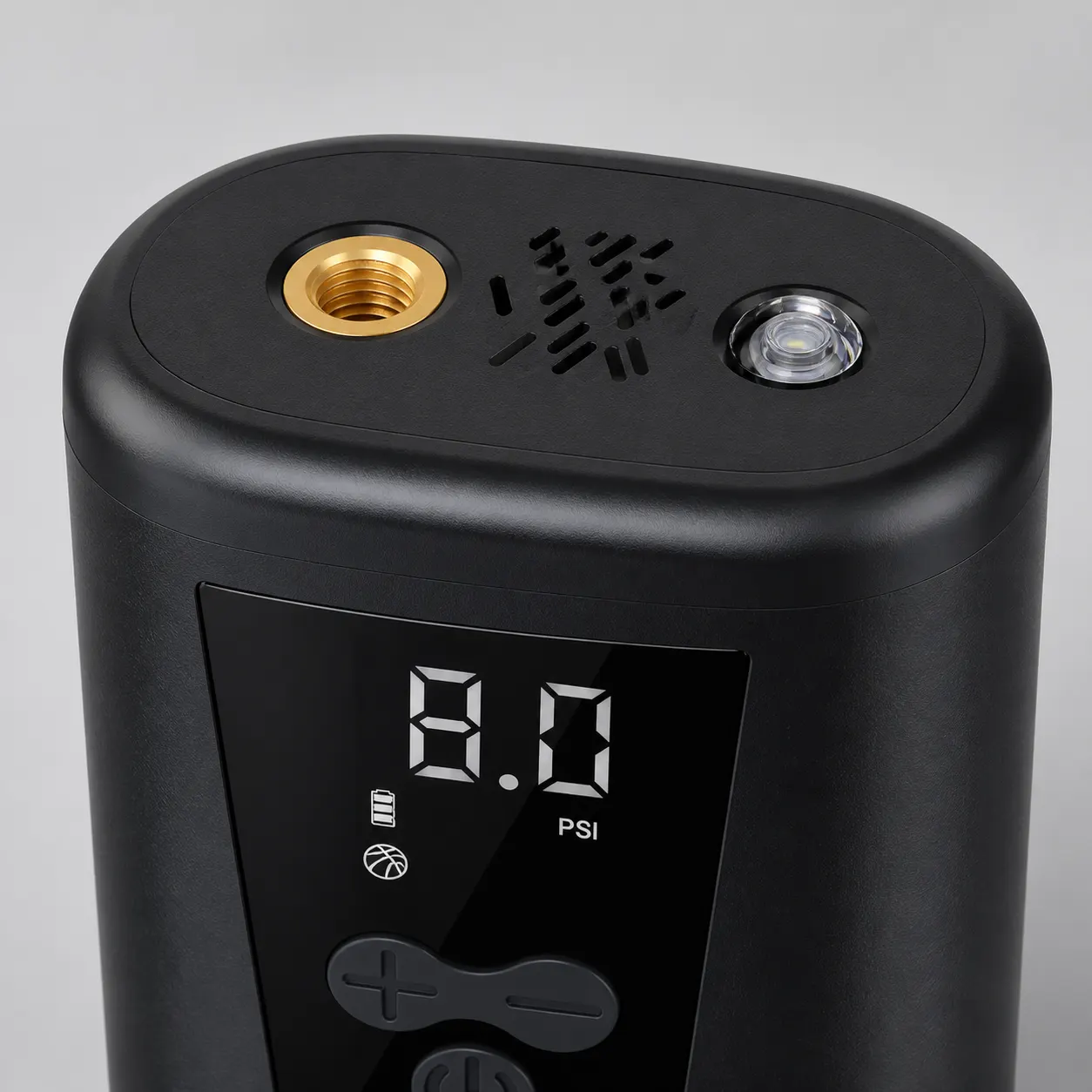
If you are searching for a football pump with pressure gauge uk, the practical answer is to look for a sports-ball pump with a clear pressure display, a compact body for the kit bag, and power that does not depend on finding a socket beside the pitch. The documented ST-9612 Black USB Electric Ball Pump is listed for basketball, football and volleyball inflation, with a digital display, USB power format, lighting and USB charging functions, ABS material and a 263 g net weight. That makes it relevant to a grassroots coach, PE cupboard or family sports bag where small top-ups matter more than heavy-duty tyre inflation.
The important buying decision is not simply whether the pump is electric. It is whether it helps you make a calmer, repeatable check before a ball goes into play. On a Saturday morning pitch in Manchester, Cardiff or a local school sports field, most ball-pressure mistakes happen because everyone is short of time and the ball is judged by squeezing it. A display can reduce that guesswork, but it should not replace the pressure range printed on the ball itself. Treat the pump as a tool for checking and topping up, not as permission to inflate blindly.
The grassroots football job before warm-up starts
The main UK setting for this search is a coach or parent-helper setting out cones, bibs and match balls while players arrive in ones and twos. The job is narrow but important: get several footballs close enough to their intended feel that warm-up, drills and the first few minutes of play are not interrupted by complaints that the ball is dead, too hard or inconsistent. A manual pump can still do this, but it becomes slower and more tiring when a whole mesh bag has softened during storage.
A compact USB electric pump changes the rhythm of that job. Instead of one adult repeatedly hand-pumping while trying to listen to players, the pump can be used as part of a quick bench-side routine: check the ball, read the display, add a small top-up, then move to the next one. The ST-9612’s listed 263 g net weight is relevant here because anything that is meant to live in a kit bag has to compete with cones, spare socks, tape, bottles and paperwork. If it is awkward to carry, it will be left at home.
The documented facts worth checking before you buy
The frozen product facts are quite specific, and they are also limited. The product title identifies the ST-9612 Black USB Electric Ball Pump. The archived offer describes a black rubber-paint finish from the selected SKU, lists use for basketballs, footballs and volleyballs, and records a digital display with a USB power format. It also lists lighting and USB charging functions, ABS material and a 263 g net weight. These are the facts a buyer can sensibly use when deciding whether the pump fits a football bag, PE cupboard or mixed-sport home.
What those facts do not document is just as important. There is no supplied pressure range in the input, no confirmed needle count, no battery capacity, no noise rating, no waterproof rating and no claim that it is suitable for tyres, mattresses, balloons or other non-ball inflation jobs. So a sensible UK buyer should compare the pump against the task rather than filling in missing details. For football use, the ball’s printed pressure guidance and the condition of the inflation valve matter. For school or club use, accessory control matters too, because small needles are easily lost in shared cupboards and match bags.
A packing bench checklist for footballs, schools and sports bags
Use this as a working check at a club packing bench, school PE office or kitchen table before leaving for training. First, confirm the ball is a football, basketball or volleyball, because those are the ball types named in the listed product use. Second, find the pressure marking on the ball and let that marking set the target, not guesswork or player preference. Third, check that the pump is charged through its USB format before it goes into the bag. Fourth, look at the display during inflation and make small top-ups rather than long, uncontrolled fills.
Then check the practical surface and setting. Use the pump on a stable surface or in your hand away from mud, puddles and loose studs, because no wet-weather protection is documented in the supplied facts. Keep any needle or adaptor you use with the pump in the same pouch every time, because needle inclusion is not confirmed in the input and replacement accessories can become the weak point of the routine. After use, put the pump back in the same place in the kit bag or PE cupboard. The aim is not a technical ritual; it is a repeatable habit that stops one soft ball becoming a five-minute delay.
Where the digital display helps and where it does not
The strongest reason to consider a digital-display ball pump is that it makes the conversation around pressure less vague. In a youth football warm-up, one player may call a ball flat because it does not bounce as expected, while another may prefer a softer feel for control drills. A display gives the coach or helper a visible reference point, especially when checking several balls in sequence. That is useful for consistency, and it can help assistants or non-specialist staff follow the same process without relying entirely on feel.
However, a display is not the same as a verified match standard, a safety certification or a guarantee of correct pressure. The documented facts say the ST-9612 has a digital display; they do not provide calibration claims or official governing-body approvals. The practical rule is simple: the ball’s own printed pressure range is the source of truth, and the display is the working aid. If a ball is damaged, the valve leaks, or the surface has become misshapen, pumping it harder is not a fix. In those cases, remove the ball from the session rather than chasing a number.
Mismatches that should make a buyer pause
This product is positioned in the supplied facts as a sports-ball pump for basketball, football and volleyball use. That is a good fit for a coach, PE teacher or family buyer who wants quick top-ups for balls. It is not enough evidence to treat it as a general inflator for car tyres, bicycle tyres, air beds, paddling pools or party balloons. If your real need is high-pressure tyre inflation or large-volume air filling, the documented facts here do not support that purchase. The search phrase may mention a pressure gauge, but the setting still matters.
Some football users may also be better served by a simpler option. If you only keep one ball at home and use it occasionally in the garden, a cheap hand pump may be adequate, provided you are patient and careful with the needle. If your club has a large equipment store and a formal maintenance routine, you may want documented accessory details, battery information and durability expectations before buying several units. The ST-9612’s compact 263 g weight is attractive for portability, but the input does not claim industrial school-proof construction or confirm how accessories are stored.
A practical comparison for coach, PE cupboard and family use
For a grassroots coach, the buying test is speed under pressure. The pump needs to sit in the kit bag, be USB charged before travel, and make it easier to check several footballs before kick-off. The documented display and sports-ball use support that job. For a PE teacher or sports technician, the test is mixed-sport readiness. The listed basketball, football and volleyball use is relevant because school cupboards rarely contain one sport only. The question to settle locally is how staff will store needles and keep the pump charged between lesson blocks.
For a family buyer, the test is convenience without overcomplication. A teenager with a basketball, a football in the car boot and a volleyball used in summer does not need a workshop tool; they need a compact pump that can be understood quickly and charged by USB. The ST-9612’s ABS material and 263 g net weight point towards a small portable object rather than a large inflator. Still, the same caution applies at home as at a club: check the ball’s printed pressure, insert the correct needle carefully, and stop when the ball is ready rather than treating inflation as a race.
The sensible next step before choosing one
Before buying, write down the real place where the pump will live: a football kit bag, school PE cupboard, car boot, backpack or kitchen drawer. Then list the balls you actually need to maintain. If they are mainly footballs with occasional basketballs or volleyballs, the documented ST-9612 use case lines up with the job. If your list includes tyres or large inflatables, it does not. This one-minute check prevents a common mistake: buying around the word ‘electric’ rather than around the job the pump must do every week.
A grounded next step is to compare the product facts against your pressure routine. You have a digital display, USB power format, USB charging functions, lighting, ABS material and a 263 g net weight documented for this black ST-9612 electric ball pump. You do not have documented claims for waterproofing, included needles, battery capacity, formal calibration or non-ball inflation. If that evidence is enough for your coaching, school or family top-up routine, it is a practical candidate. If any missing detail is essential to your setting, resolve that before relying on it pitch-side.